



We are building a modern energy-efficient house: how to protect from moisture and competently arrange the area
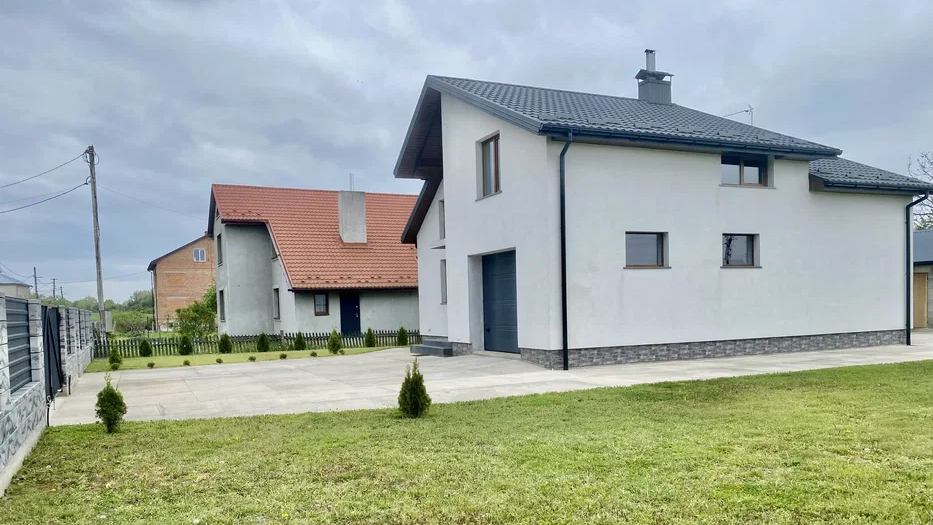
The construction season in Ukraine lasts almost the whole year, but the three summer months remain the undisputed favorite for the construction of a private house. Thanks to this, it is possible to build quickly, qualitatively and without technological pauses, especially when pouring a concrete foundation. For the correct maturation of the cement-sand mixture, a stable temperature within +15°C…+25°C is required.
In warm weather, concrete reaches its critical 70% strength in just 7–10 days (instead of 28 days in cool autumn). This means you don’t have to wait long and can start building walls almost immediately. Plus, you don’t need anti-freeze additives .
However, the main enemy of summer concrete is heat above +30°C and direct sunlight, which cause water to evaporate too quickly, preventing the concrete from completing the crystallization process. During the first 3–5 days , the concrete should be watered abundantly with water from a hose. It should be constantly moist , not dry. Geotextiles are ideal for this.
Now let's get to the main thing: the foundation and walls are only half the battle. The main secret to the durability of a private house is reliable waterproofing. Without it, even the strongest concrete will begin to collapse under the influence of groundwater and precipitation.
Why waterproofing is the foundation of the basics:
Protection against destruction : Water, penetrating into the pores of concrete and freezing in winter, expands, which leads to microcracks and gradual crumbling of the material.
Healthy microclimate : The absence of dampness is a guarantee that mold and fungus, which are dangerous to health, will not grow in the walls.
Energy efficiency : Dry walls and foundations retain heat much better than damp ones, which directly affects your heating bills .
Saving on waterproofing during the construction phase is a direct path to major repairs in just a few years. Replacing or restoring damaged structures will cost many times more than the original materials.
To reliably protect the house, foundation waterproofing should be comprehensive and include several mandatory stages at the construction stage: horizontal (cutting off capillary moisture from the walls), vertical (protection of the foundation walls) and arrangement of drainage around the building. To increase the water resistance of concrete, we recommend the plasticizer Protex , and for the strength of concrete - polypropylene fiber .
Modern construction uses a time-tested and practice-tested three-stage foundation waterproofing system: Izoplast bitumen mastic , effective insulation and SNTDrain drainage spike membrane (preferably with geotextile). The membrane can be glued with K2 sealant tape .
The entry of utilities (water pipes, sewage, cables) through the foundation or basement walls is the most vulnerable area of any building. The only uncompromising solution for absolute sealing is the use of bentonite cord .
Preparation for pouring the foundation.
Almost no construction of a private house is complete without technological breaks during the pouring of concrete. But did you know that this very place is the main gateway for groundwater? The ideal foundation is a monolith, poured in one go without stopping. However, in real life this is a rarity. The cold joint must be sealed directly during the construction process. Bentonite cord and/or a hydro-plug are best suited for this.
And to create the formwork, you will need components: reinforcement rebar spacers, tension screws and PVC pipes, clamping nuts or spring swimgages, as well as lubricant for formwork - it guarantees easy dismantling of the formwork panels and as a result you will get a perfectly smooth concrete surface without defects. After completing the formwork stripping stage, do not forget to seal the through holes that remain in the concrete after removing the tension screws (studs) with a round bentonite cord.
 There is one material that is used at every stage from foundation to roof, but is often underestimated. It is construction plastic wrap.
Also, at the final stages, such elements as window openings (slopes and seams) and the open terrace of a private house require proper finishing. For windows, we have sealants, and for waterproofing the terrace (and bath) - the Hydroflex system. For the improvement of the garage, do not forget about the bumper, elastic baseboard and handrail for the railing, and for the plot - we offer geotextiles (agrofibre) for protection against weeds in flower beds and lawn geogrids .
Building a house in Ukraine from scratch is hard work and a serious challenge. But it is quite possible and brings incredible satisfaction if you are ready to manage this process: with a clear plan, proven technologies and independent quality control. Building with our company is an opportunity not only to purchase a set of materials, but also to get a reliable strategic partner and consultant .
