



Consumption of form release grease (form oil) from the producer: how to achieve the optimal balance and avoid overspending
_228_1782911367.png)
When constructing monolithic concrete structures, the choice of formwork material is usually justified by its cost, strength, or turnover (number of cycles of use). However, professional builders are aware of the existence of a hidden cost item — the amount of form oils used.
Incorrect selection of the pair «formwork material — form release grease» can increase the cost of construction chemicals by 3-4 times. In addition, this directly affects the speed of stripping and the finishing quality of the concrete surface. The correct selection and calculation of the amount of lubricant (grease) for formwork is a guarantee of a smooth concrete surface after stripping and a long service life of the panels themselves.
As a Ukrainian manufacturer of form oils (in particular ZAP-11) and formwork components, we know exactly how to optimize the use of material on site without losing quality.
Basic calculation formula
To find out the total volume of material required, use a simple proportion:
V = S x H x K
V is the total volume or mass of the lubricant (l or kg).
S is the total surface area of the formwork that is in direct contact with the concrete (m²).
H is the consumption rate of a specific product per 1 m² (specified by the manufacturer).
K is the coefficient of technological losses (usually 1.1–1.15, i.e. 10–15% of the reserve for spraying and absorption).
The key factor that determines how many liters of form release grease your covered area will «eat» is the porosity and absorbency of the material.
.png)
.png)
Main factors affecting consumption
The same volume of our form release grease can cover a radically different area. The amount of material used depends on three key parameters:
1. Material and surface porosity
Metal and plastic: Have zero absorption capacity. The grease remains on the surface, so its consumption is minimal. Consumption 1 liter per 65-80 m².
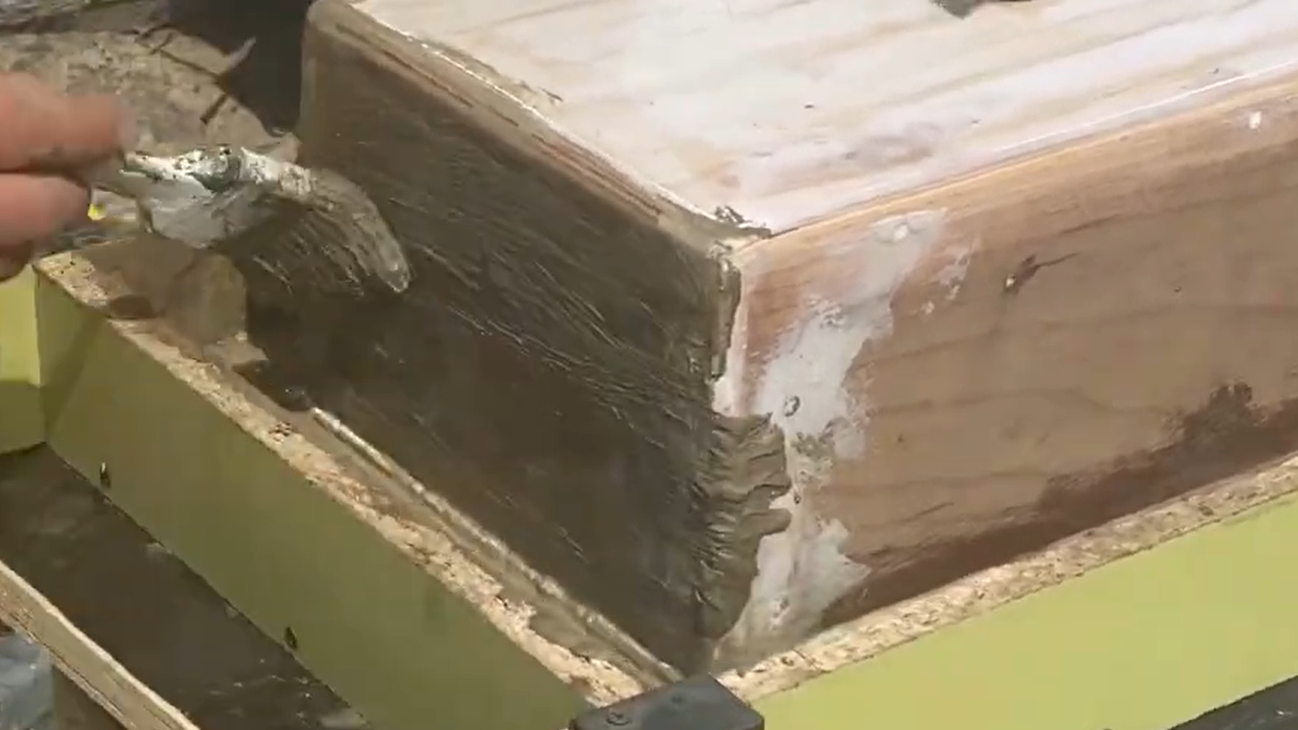
Laminated plywood: The protective layer limits absorption, but with each new cycle of use, the plywood wears out and begins to absorb more liquid.
Wood (board, unlaminated plywood): Porous material that actively absorbs liquid mixtures. Here the consumption will be maximum: 1 liter per 20-40 m².
2. Application method
Sprayers: Create the thinnest and most even layer. This is the most economical method that we recommend to all customers. Reduces consumption by 20–30% compared to working with a roller or brush.
Rollers and brushes: Often lead to the formation of too thick a layer, overflows and puddles, which increases consumption.
3. Ambient temperature and viscosity
In winter, conventional oils thicken, which causes the thickness of the applied layer to increase spontaneously. We have developed a winter mixture ZF-10, which maintains a liquid consistency and a stable flow rate even at negative temperatures (down to -20 °C).
.png)
Advantages of working directly with the manufacturer
1. Guarantee of stable composition: Our lubricants are completely ready to use, do not separate during storage and do not require self-dilution.
2. Direct price without intermediaries: You get a favorable price per liter and flexible terms for large wholesale (deliveries in cans or barrels).
3. Expert support: We will calculate the amount of form release grease for the specifics of your construction.
