



Checklist: 7 mistakes when installing armature rebar spacers
__1782464082.png)
Creating a protective layer of concrete is the basis for the durability of any reinforced concrete structure. If the reinforcement is displaced even by a centimeter, the monolith will lose its strength, and the metal will begin to rust in just a few years. Installing the retainers is very simple, provided that simple conditions are met. We provide a detailed analysis of typical mistakes, their consequences, and methods of prevention.
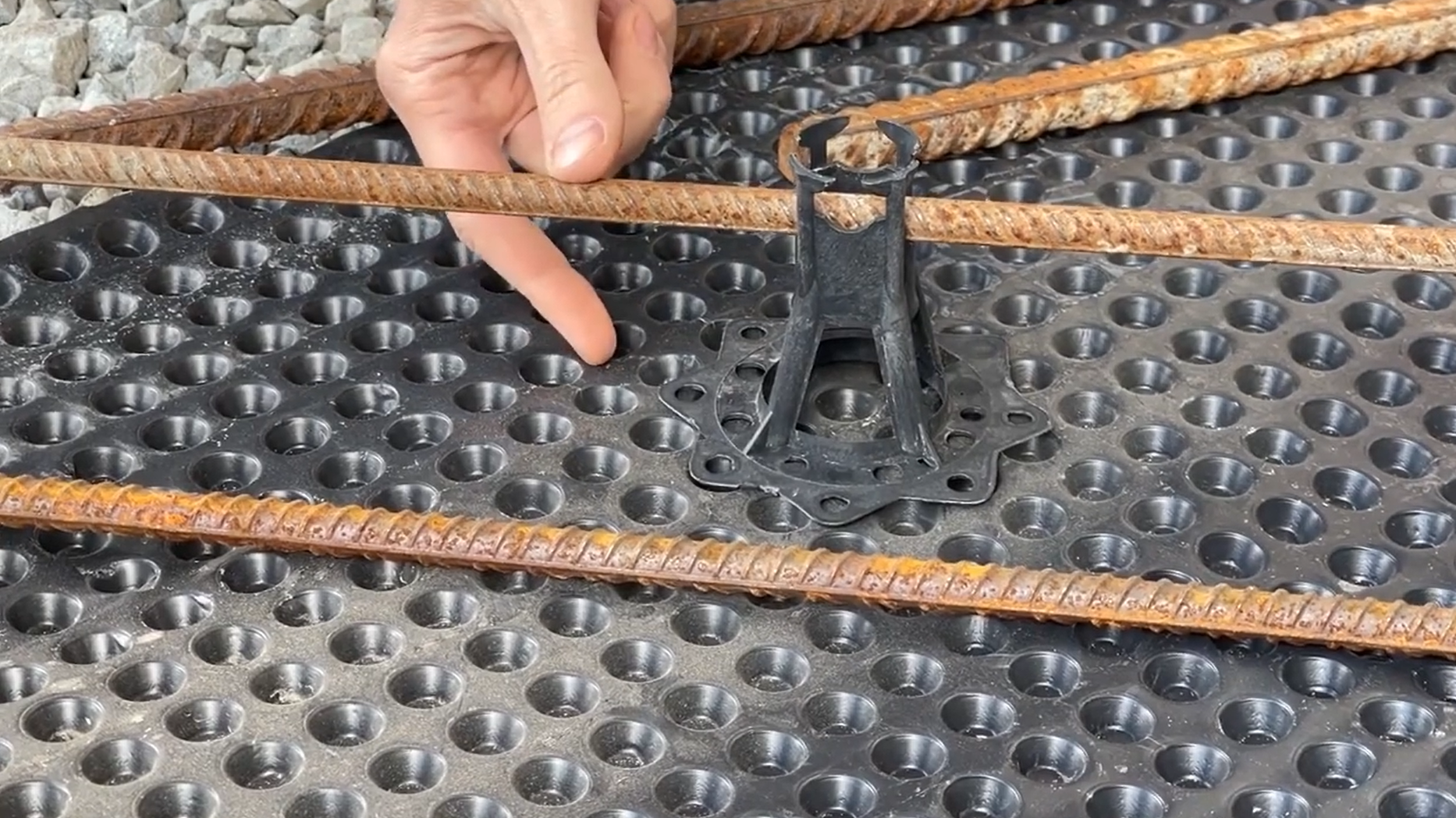
1. Insufficient number of clamps (too large a step between them): saving on the number of clamps leads to sagging of the reinforcing bars under the weight of the concrete mixture or workers.
How to avoid: Install clamps at intervals of no more than 1 m (depending on the thickness of the reinforcement and the weight of the frame), as well as at the intersections of the rods. Norm: 5–8 pieces per 1 m². If thick, heavy reinforcement is used (diameter d ≥ 16 mm), the number is increased to 8–10 pieces per 1 m².
2. Insufficient or excessive concrete protection layer: using fasteners of the wrong size. If the layer is too thin, the reinforcement will start to rust; if it is too large, the concrete structure will lose its tensile strength in the area of application of loads.
How to avoid it: Strictly follow the project. For example, foundations usually require a layer of 40-50 mm, and floor slabs - 15-25 mm.
3. Using improvised materials instead of special fasteners: using pieces of brick, rebar, wood or plastic bottles. Such materials do not provide the necessary strength and can cause voids in the concrete.
How to avoid: Use only factory plastic or concrete spacers (such as "chair" , "round plate mesh spacer", "wheel"). They must withstand a weight of up to 250-300 kg and not deform from loads.
4. Ignoring loose or soft base: installing universal plastic “rack” fasteners directly on sand, gravel or waterproofing. Under the weight of the reinforcement, the fasteners will fail or tear the insulation.
How to avoid: On loose or soft soils, use special "round plate mesh spacers" that distribute the load.
5. Movement along the frame without support boards: stepping on the reinforcement between the clamps during concrete reception bends the fasteners and breaks the supports.
How to avoid: use ladders and walking bridges.
.png)
6. Stability problems in vertical structures: “wheels” spacers are poorly secured to the reinforcement and shift during concrete placement or vibratory compaction.
How to avoid: Choose the correct diameter for the rod, use clamps with secure latches, and position them so that they tightly grip the rod. Secure them with binding wire if necessary.
7. Installing the clamps after the frame is tied: trying to lift the already fully tied heavy frame with crowbars and push plastic stands under it. In this case, the clamps break or become crooked, the frame bends, and you spend more effort and time.
How to avoid: The retainers must be set consistently during the formation and layout of the bottom row of the grid.
.png)
Checklist before pouring concrete:
- All the latches are level, none have tipped over to the side.
- The plastic under the reinforcement does not have cracks from accidental impacts.
- No element sank into the sand or foam.
- Homemade substrates (pieces of brick, wood, or granite) are strictly prohibited. Unlike plastic, wood will rot, and silicate brick will absorb moisture and destroy the concrete from the inside.
