



TOP-12 questions about bentonite strip (rope): we break down myths and facts
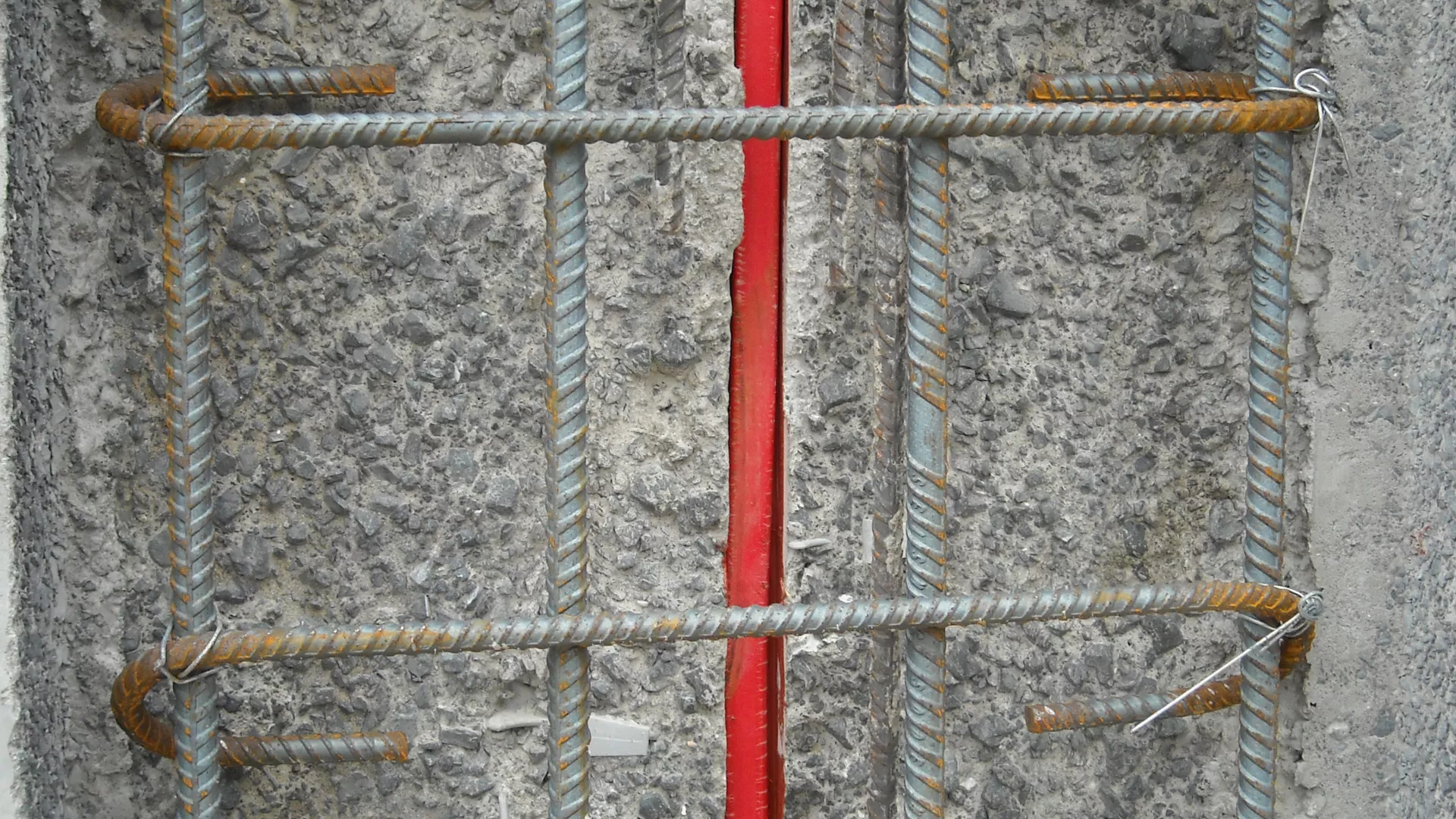
Waterproofing of technological joints using natural bentonite clay is becoming a standard in eco-construction. And the fact that bentonite stripe withstands hydrostatic pressure up to 7 atmospheres (70 m. water level / 700 kPa) guarantees that the concreting joint will remain dry and airtight even under constant, powerful groundwater pressure.
1. How exactly does bentonite stripe work?
The material contains about 75% bentonite clay (namely sodium bentonite), which has the unique property of expanding (swelling) upon contact with water. Increasing in size up to 3-4 times (up to 300–400%) , it fills all cracks and voids, creating a continuous waterproof layer.
2. Does bentonite stripe dissolve in water and wash out of the seam over time?
No, it is not possible. The rubber or polymer base of the rope binds the clay grains, preventing water from washing the mineral out of the bentonite stripe. The material works throughout the entire life of the building.
3. Does the waterstop work without water?
No, the main condition for expansion and the creation of a sealed layer is direct contact with water. Without water, it remains in its original state, but when water appears, it immediately begins to act.
4. How many expansion and compression cycles can a bentonite stripe withstand?
The service life is unlimited, provided that it is installed correctly: bentonite bundles must be installed in a tightly confined space (for example, in a concrete construction joint).
5. What is the minimum layer of concrete that should be above the tie?
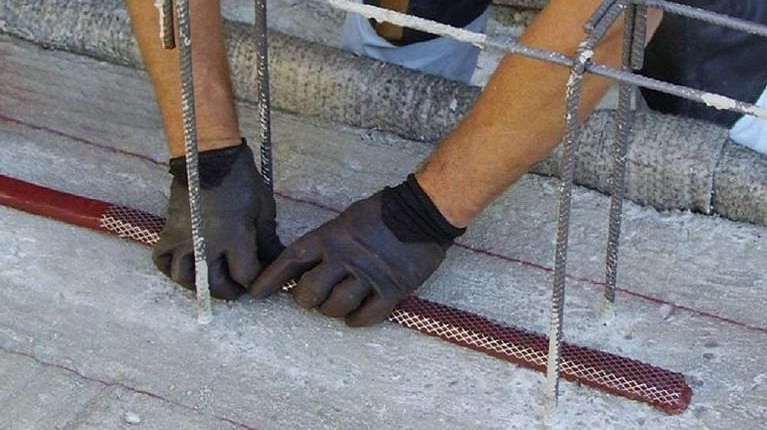
The minimum thickness of concrete is usually 7-8 cm (3 inches) on all sides. This is critical because a thinner layer of concrete may not be able to withstand the expansion of the tie (which will cause the concrete to crack).
6. For reliability, is it better to buy the largest size of harness?
No, the size is selected strictly according to the thickness of the concrete structure and reinforcing frame. Therefore, our company produces various cross-sections for specific tasks: 5×20 mm, 10×20 mm, 15×25 mm, 20×30 mm and round 22 mm .
7. Can the rope be installed in the rain?
No, because bentonite has a high absorption capacity, moisture causes it to swell prematurely before pouring concrete.
8. Where is this material most often used?
- - Cold and construction joints: horizontal and vertical technological joints of interruption of concreting that occur during the pouring of concrete.
- - Structural joints: sealing of wall-to-floor slab and wall-to-foundation joints.
- - Engineering communications: sealing the entry points of pipes, cables and other engineering networks into the building.
- - Reservoirs: drinking water tanks, waterproofing of swimming pools, wells and treatment plants.
- - Construction elements: foundations, basements, parking lots, tunnels, as well as sealing of residual technological holes in concrete after removal of formwork.
9. Can it be used in expansion joints?
No. Bentonite stripoe is intended for “cold” joints only. It is not suitable for expansion joints (which are subject to vibrations or lateral movement).
10. How is the stripe attached to the concrete?
The cord is fixed to the surface before pouring the next portion of concrete. Installation is performed in several ways:
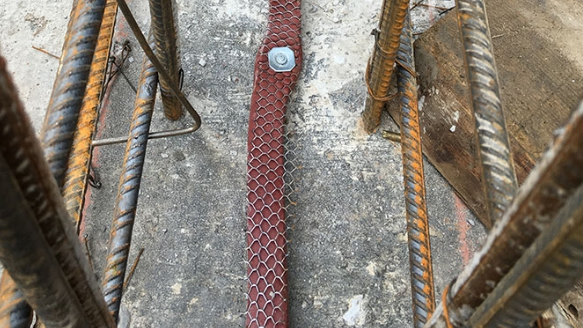
- - Special galvanized metal mesh ,
- - Dowels (in increments of 25-30 cm),
- - Glue sealant.
11. Is bentonite stripe effective in saltwater or chemically contaminated water?
No, bentonite may lose some of its swelling ability when exposed to high concentrations of salts (e.g. seawater) or aggressive industrial chemicals (alkaline environments such as fresh concrete, acids, heavy metals and petroleum products prevent normal swelling).
Alternative solution: water stopper.
12. Can bentonite rope be installed in frost?
It is not recommended to install bentonite cord outdoors at temperatures below 0°C as it becomes brittle and loses elasticity. However, it is possible, and cold weather adhesive should be used, or temporarily heated to prevent cracking (or lack of adhesion of the material).
Installation temperature: -15°C to 50°C (5°F to 125°F).
Operating temperature range: from -30°C to +50°C (standard) and -45°C to +120°C (special bentonite cords).
