


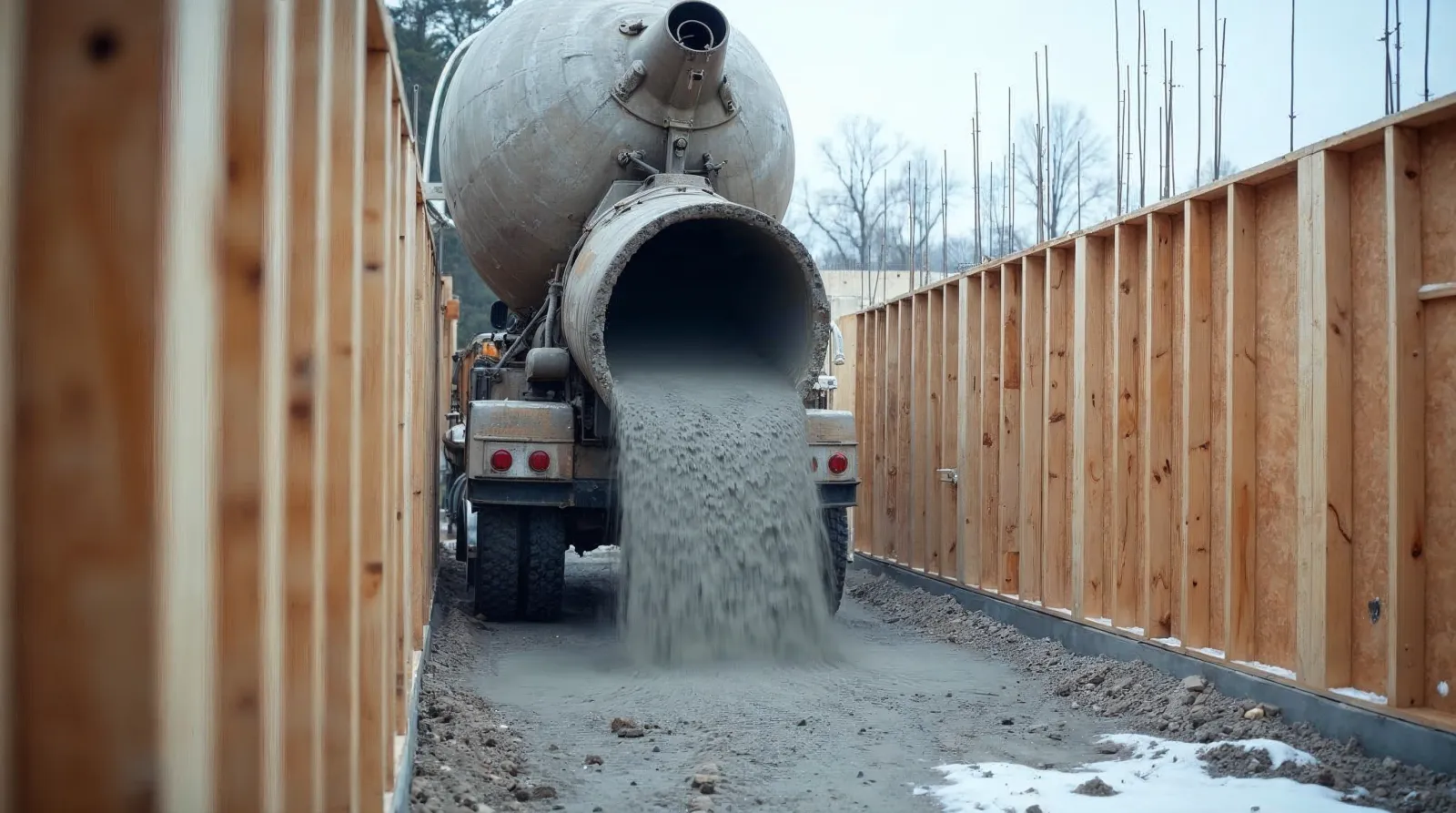
Antifreeze additive in concrete is dosed in percentage of cement mass, and not in liters per cubic meter. The quantity depends on concrete brand and air temperature, so the exact figure is taken from the instructions for a specific additive. For example, NITCAL S 45, according to the manufacturer, operates in the range from +5 to −25 °C.
- Dosages are indicated in % of cement mass, so first find out how much cement is in 1 m³ of your concrete.
- The amount of additive is chosen based on the minimum temperature for the next 7 days, not the daily temperature.
- According to the manufacturer, NITCAL S 45 operates from +5 to −25 °C and reduces the water content in the mixture to 10%.
- The additive does not replace shelter: in cold weather, concrete is still covered with film, mats, or insulation.
- If the additive has already been introduced at the factory, it is not added again at the facility.
How much antifreeze additive to add to concrete
Add as much as the instructions for the additive indicate for your temperature and brand of concrete. The dosage is given as a percentage of the mass of cement, so the same number of liters per 1 m³ is not suitable for different concretes.
In concrete of a brand with a higher cement content, the additive will be used more, and in severe frosts, the instructions usually require a higher percentage. A smaller amount will not protect the water from freezing at the stated temperature. A larger amount may change the properties of the mixture, so you should not deviate from the instructions.
How the antifreeze additive works and why it accelerates the set of strength is discussed in the article about the antifreeze plasticizer NITCAL S45 .
How to calculate the dosage in liters per 1 m³ of concrete
To get liters per 1 m³, you need 3 numbers: cement content, percentage from the instructions, and density of the liquid additive. Collect them before ordering concrete.
| Data for calculation | Where to get it | Unit |
|---|---|---|
| Cement content in 1 m³ | Recipe or passport of the concrete plant | kg |
| Supplement dosage | Instructions for the supplement for your temperature | % of cement mass |
| Density of liquid additive | Additive passport or technical sheet | kg/l |
| Filling volume | Design or construction drawing | m³ |
| Minimum temperature | Forecast for 7 days after pouring | °C |
Calculation procedure:
- Take the cement content in 1 m³ from the recipe, for example from the concrete plant's passport.
- Find the dosage in percentages for your minimum temperature in the instructions.
- Multiply the mass of cement by the percentage and divide by 100: this is the mass of the additive in kg per 1 m³.
- For a liquid additive, divide the mass by the density from the passport: you will get liters per 1 m³.
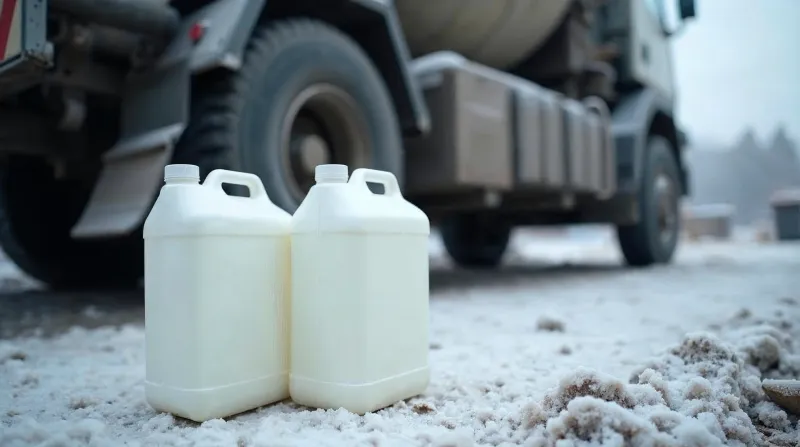
- Multiply by the fill volume and round up to whole canisters. NITCAL S 45 is sold, for example, in 5 liter canisters.
If the concrete is being delivered from a factory, provide the calculation to the supplier and agree on who will add the additive. Check with the technologist for the exact dosage for your recipe.
Up to what temperature does the antifreeze additive work?
Each additive has its own lower limit, and it is specified by the manufacturer. According to the manufacturer , the antifreeze additive for concrete NITCAL S 45 is designed to work from +5 to −25 °C. Below −25 °C it is already out of its range.
The additive works together with the shelter, not instead of it. Cold slows down hardening: at +20…+25 °C, concrete gains its brand strength in 28 days, and in winter this period increases to 35–38 days.
| Minimum temperature | Additive | Shelter |
|---|---|---|
| From 0 to +5 °C | According to the instructions for this range | Film |
| From −3 to 0 °C | According to the instructions for this range | Film |
| From −25 to −3 °C | According to the instructions for this range | Mother or baby |
| Below −25 °C | Out of range NITCAL S 45 | Warm-up according to the technologist's decision |

Construction film retains the heat of concrete to approximately −3 °C. In severe frosts, three-layer mats or insulation are added. For more information on protection methods, read the article How to Pour Concrete in Winter .
Is it possible to add antifreeze additive to the masonry mortar?
Yes, if the instructions for the additive allow it. According to the manufacturer's description, NITCAL S 45 is intended for concrete, mortar and dry building mixtures, it is used for screeds and masonry.
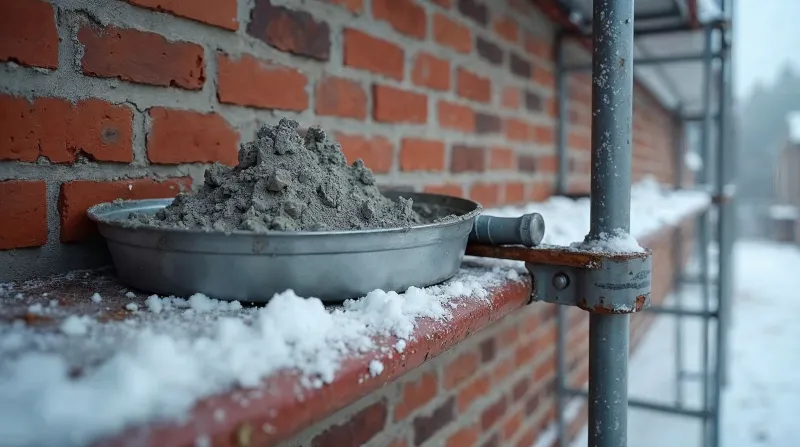
For the solution, the calculation is the same: percentage of the mass of cement in the mixture. The proportions for the solution and for concrete in the instructions may differ, so check a separate line. For more information on the properties of NITCAL S 45 at low temperatures, see the article Antifreeze additive NITCAL S 45 at low temperatures .
Does antifreeze additive affect reinforcement?
It depends on the composition of the additive. According to the manufacturer's description, NITCAL S 45 is suitable for reinforced and unreinforced concrete.
For any additive, check the data sheet for chloride content: chlorides can cause corrosion of reinforcement. For reinforced structures, agree on the choice of additive with the technologist or designer.
Typical dosing errors
- Pour the additive by eye. Without calculating the mass of cement, it is easy to miss the dosage in the instructions.
- Add the additive again at the facility if it has already been introduced at the factory.
- Choose the dosage based on the daytime temperature, not the nighttime minimum.
- Rely only on the additive and do not cover fresh concrete.
- Pouring concrete on a frozen base, ice, or snow: this cannot be done even with an additive.
How much additive is needed for your concrete?
Choose an antifreeze additive if the minimum temperature in the next 7 days does not exceed its range, and supplement it with shelter. Calculate the dosage based on the mass of cement in your recipe according to the manufacturer's instructions.
Send the Protex technologist the brand of concrete, the volume to be poured, and the weather forecast. He will help calculate the dosage in liters and tell you how many canisters to order.
Common questions
How many liters of antifreeze additive are needed for 1 m³ of concrete?
It depends on the cement content and the percentage from the instructions. Multiply the mass of cement in 1 m³ by the percentage, divide by 100 and by the density of the additive from the passport.
Is it possible to pour concrete with an additive without shelter?
No. The additive prevents water from freezing, but fresh concrete in the cold is still covered with foil, mats, or insulation.
Is it possible to add an antifreeze additive to concrete from the factory?
Yes, if the factory did not introduce it. First, check the recipe with the supplier to avoid adding the additive twice.
Does the antifreeze additive harm the fittings?
Depends on the composition. Check the chloride content in the passport and for reinforced structures, agree on the choice of additive with the technologist.


